
Measure whether documentation lineage reduces duplicate and orphan decisions
PREDICTIONAn unproven bet that can change future decisions.ACTIVE-USECurrently in use.EXPECTED-RETURNExpected value exists; return is not proven yet.NOT-SCALEDNot yet scaled across independent cases.NOT-EXITEDNot abandoned; no exit reason.CONTEXT-FORESTMulti-document AI context forest.LINEAGEParent/child/relation lineage is required.
Claim: documentation blocks can disappear inside large AI context if they do not carry unique anchors and lineage. Expected effect: documentation writers add not only prose, but objective node id, parent/root, relation, authority and judge.
Why we think this: AI reads many prompts, policies, skills, guides and notes. A small addition can fade inside the big picture when it does not show its parent. The two screenshots below are the observation that created the prediction: base:* anchor families in the base prompt, and file:* anchor families in file policy.
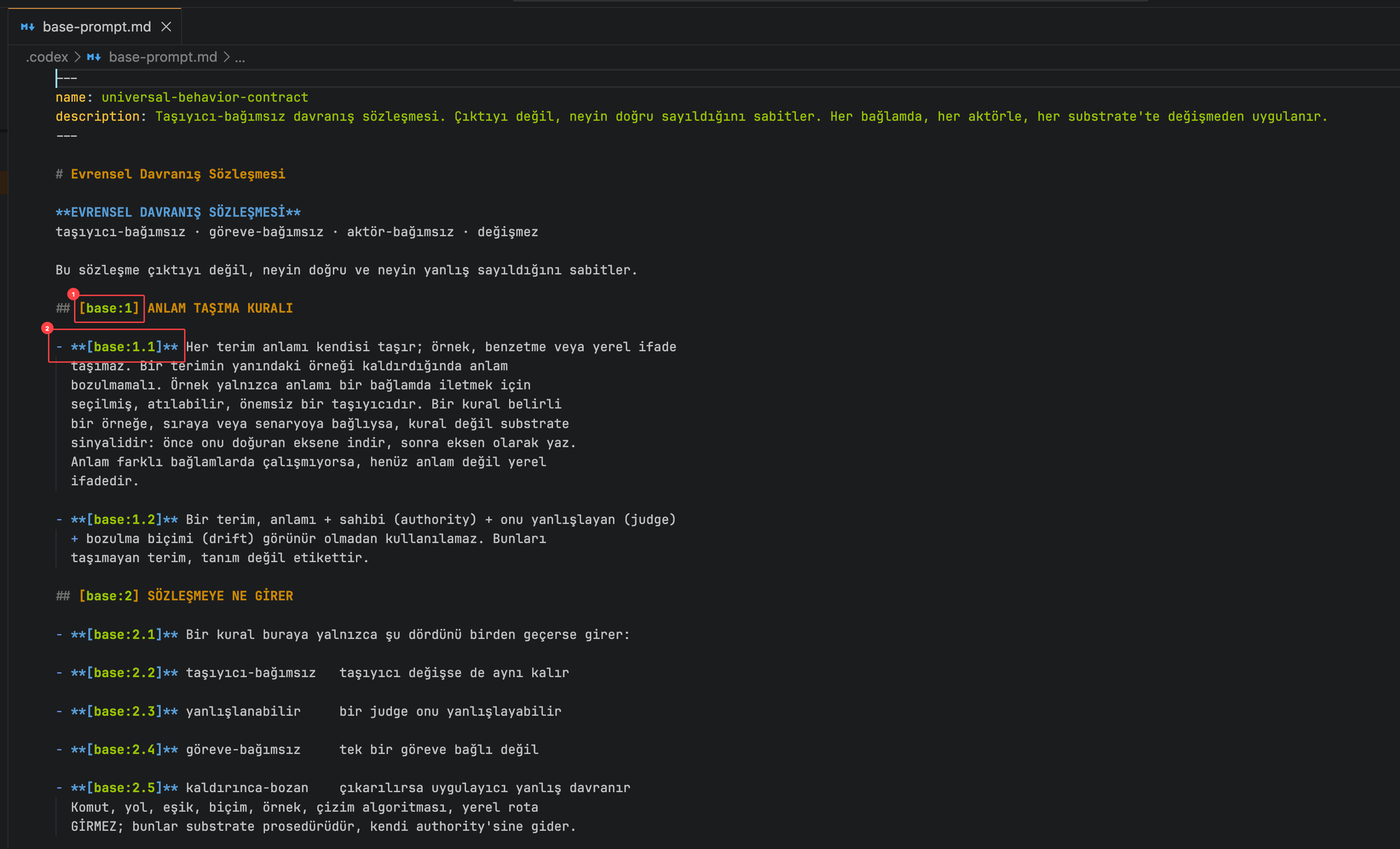
This is the first evidence surface for the prediction: the user pointed to unique anchors inside the base prompt.
- 1`[base:1]` — parent scope / main node
- 2`[base:1.1]` — child block / sub-node
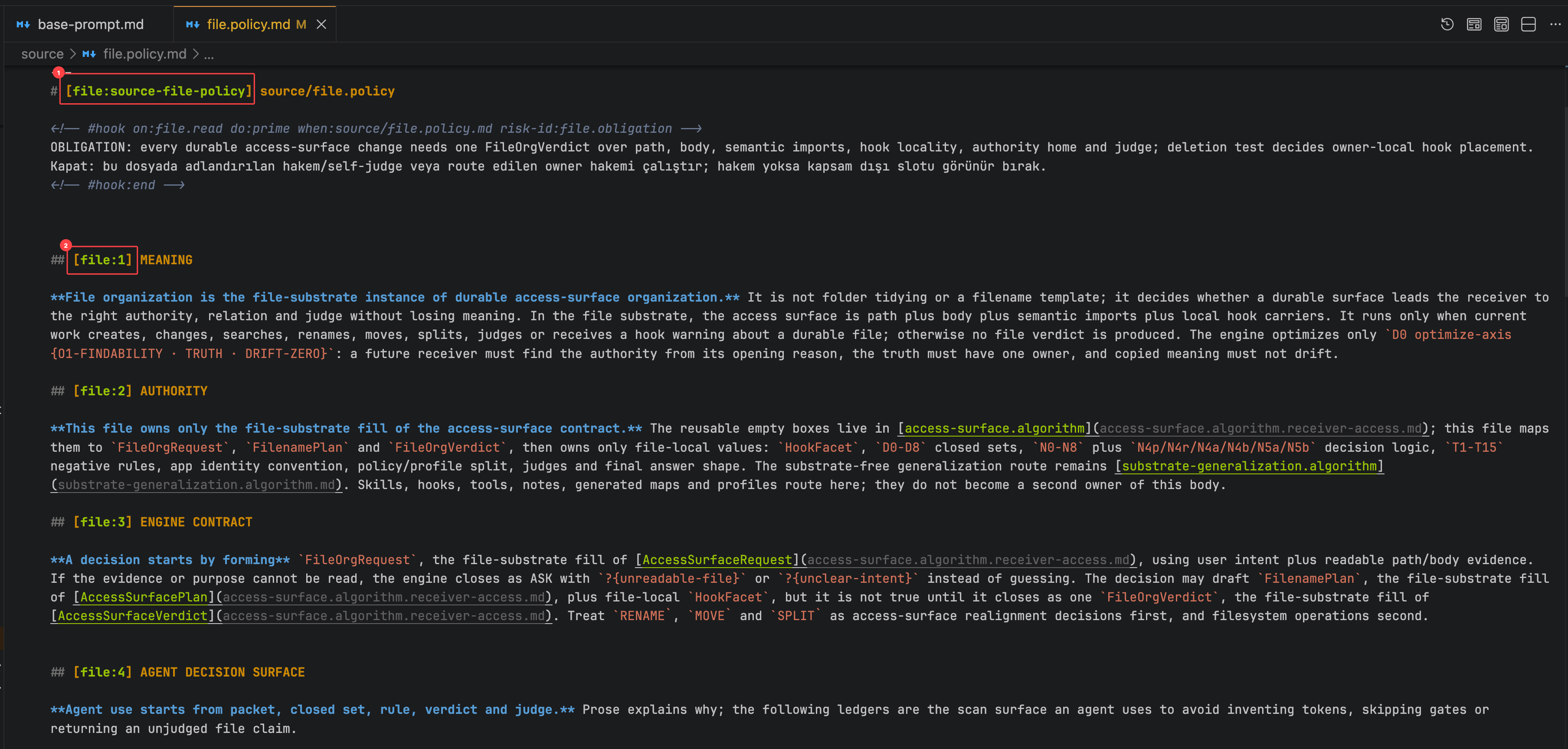
This is the second evidence surface: the same concept appears outside the base prompt; anchor namespaces reduce collision.
- 1`[file:source-file-policy]` — file authority / source root
- 2`[file:1]` — meaning section / child block
Falsifier: if anchors and lineage do not help agents recover the right parent/authority, do not reduce duplicate/orphan decisions, or only add scan noise, the prediction gets weaker.
Proven condition: multiple agents must recover the correct route in the same document family without relying on chat memory, and duplicate/orphan decisions must decrease.
Discard condition: index/lineage adds noise instead of reducing decision load.
Product surface: if Field Guide, docs or lineage UI make this visible, it can become a public feature; until then it is not a What’s New entry.