 OptionOS
 How Should We Prompt AI: An Experiment
I tried 3 different approaches when working with AI. Same task, same images. Only the prompt changed.
Experiment: Binary Tree Decision UI
I wanted AI to design a UI. I gave it 3 images, explained the concept. Then I asked using 3 different approaches.
1. ONE SHOT - Give Everything at Once
I gave AI everything I wanted in one go. All images, all descriptions at once.
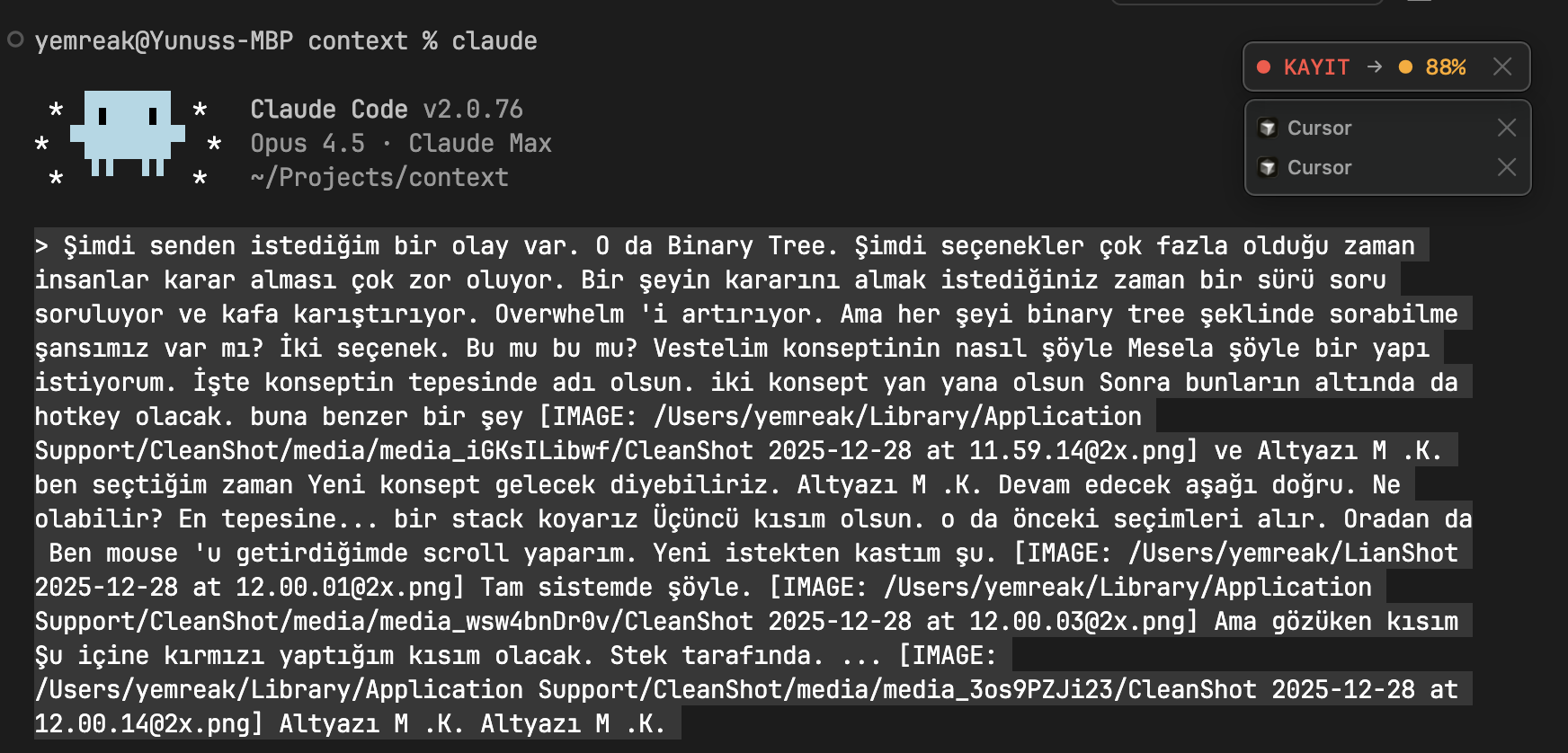
AI’s First Response
Went straight to “Got it” and gave the concept:
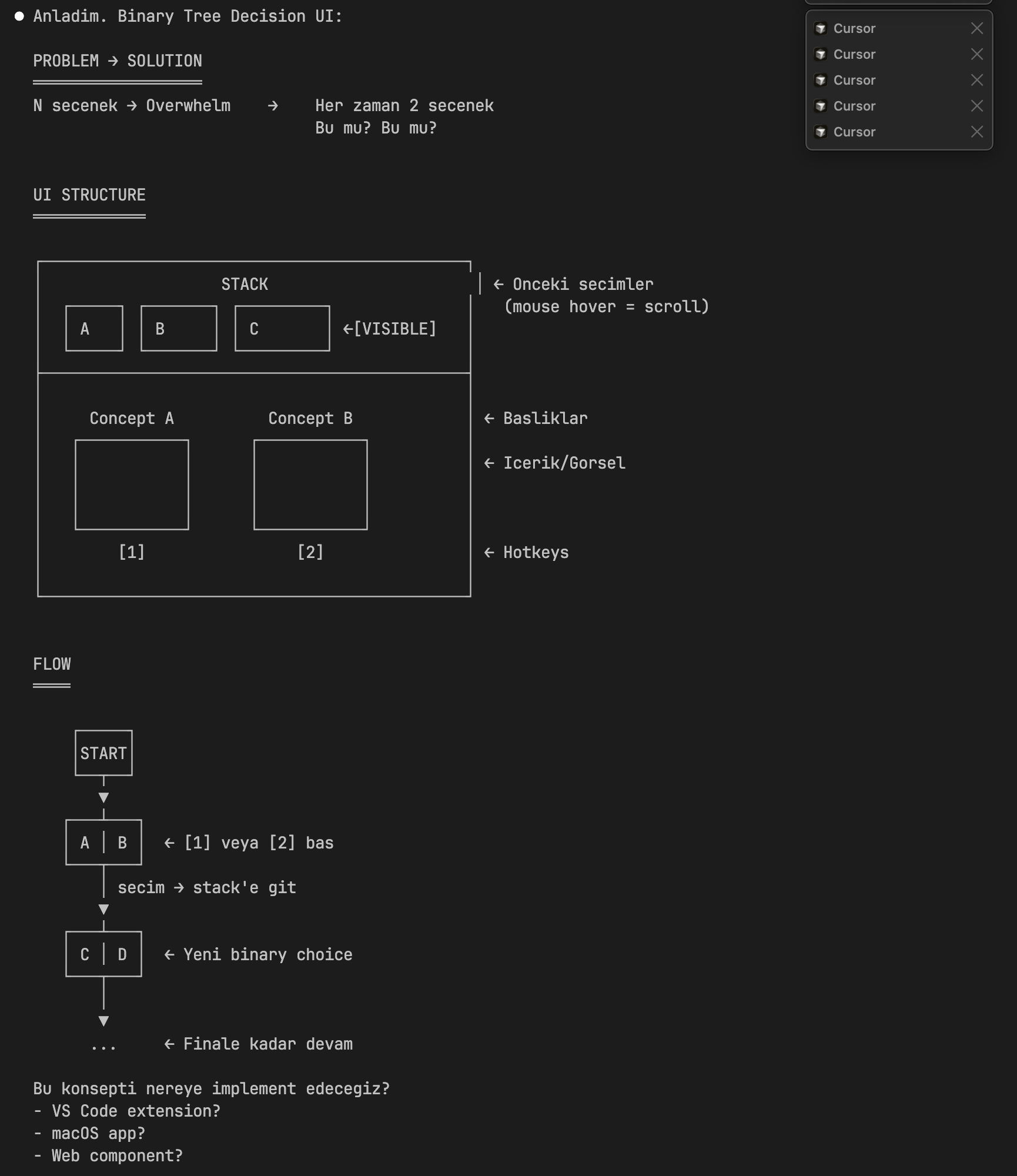
Prediction
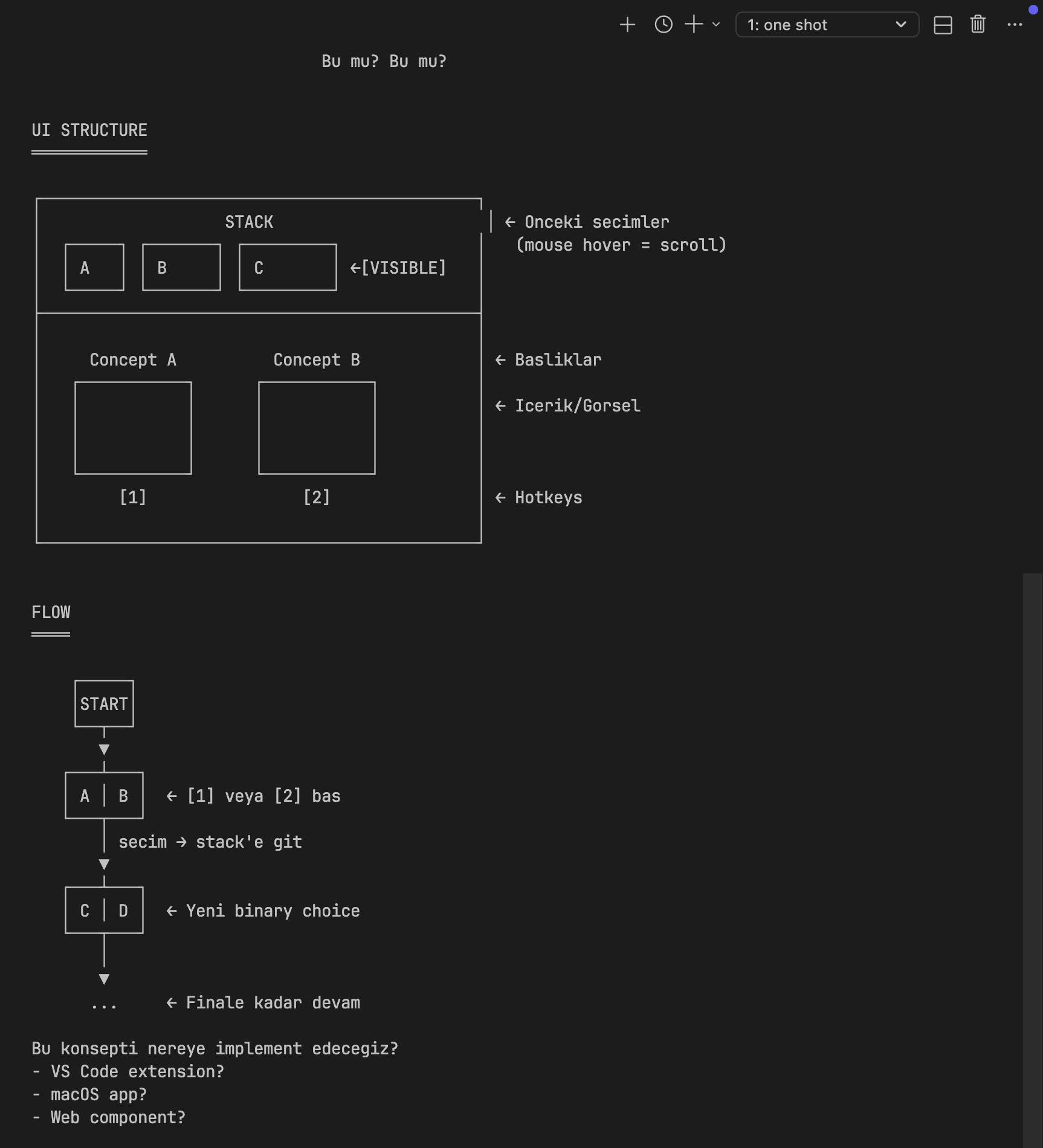
Actual Output
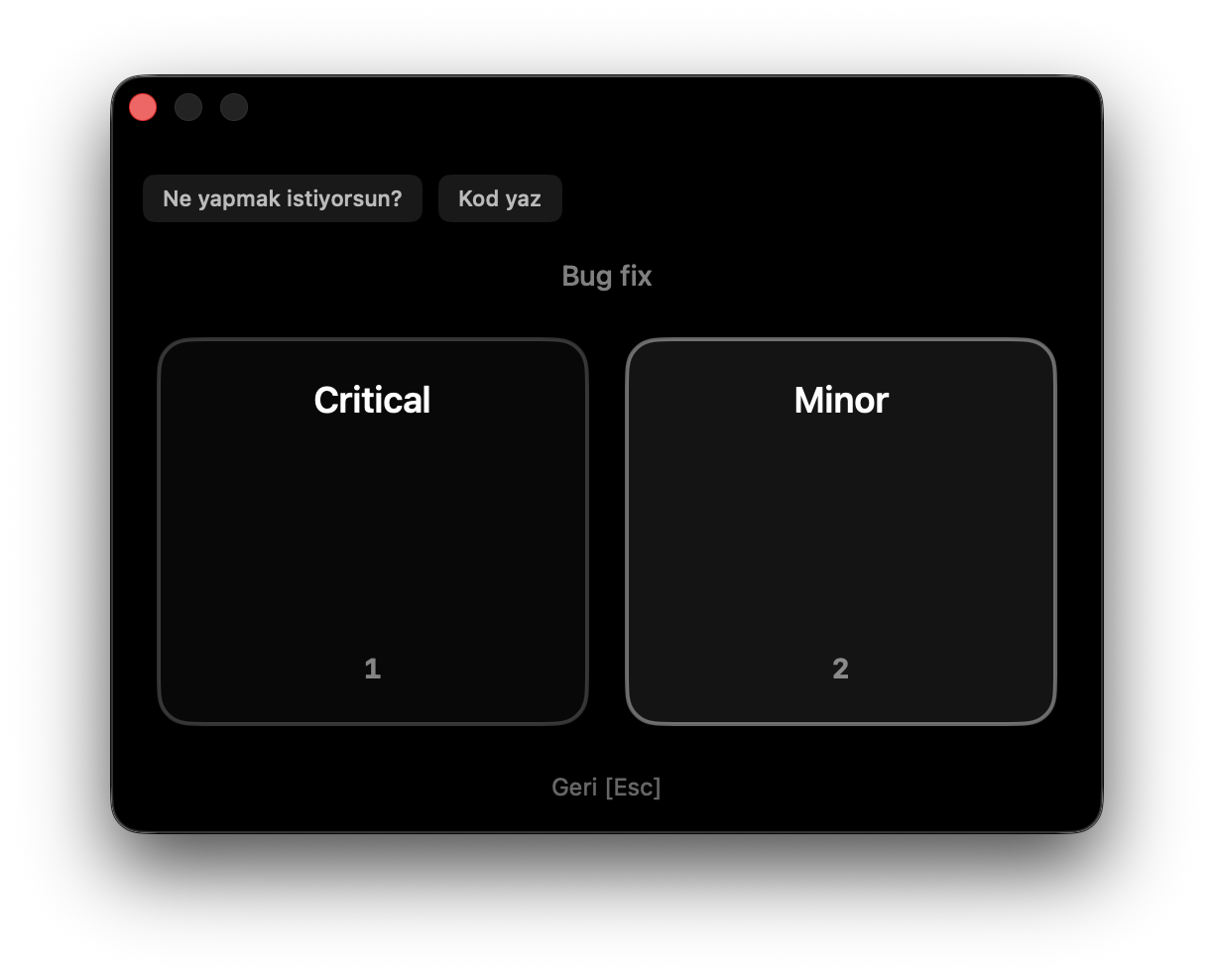
Result: Hotkey works, stack view works, everything is solid.
2. CONCEPT FIRST - Concept First, Then Implement
I told AI to first extract the concept, then read the images and refine.
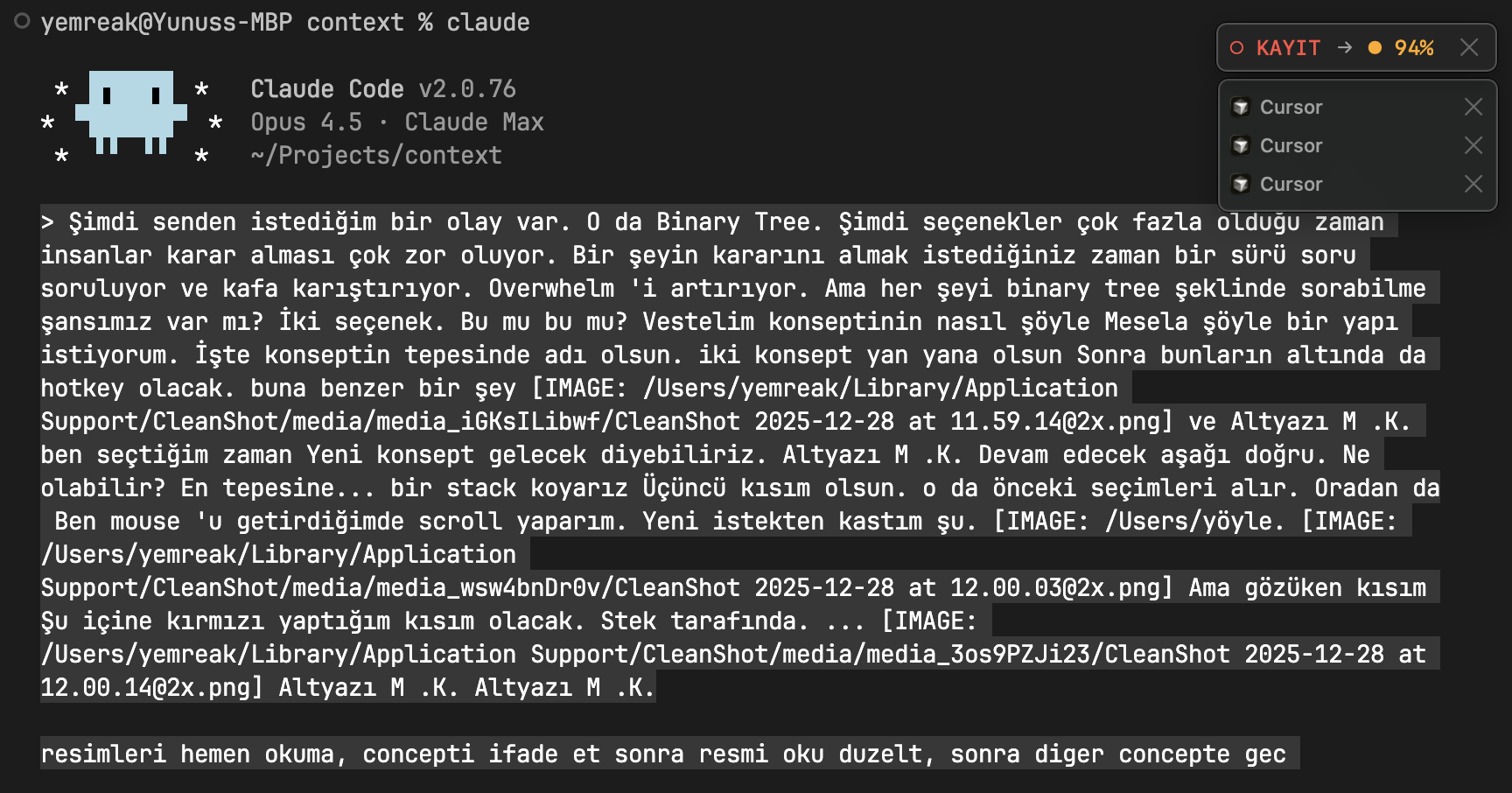
AI’s First Response
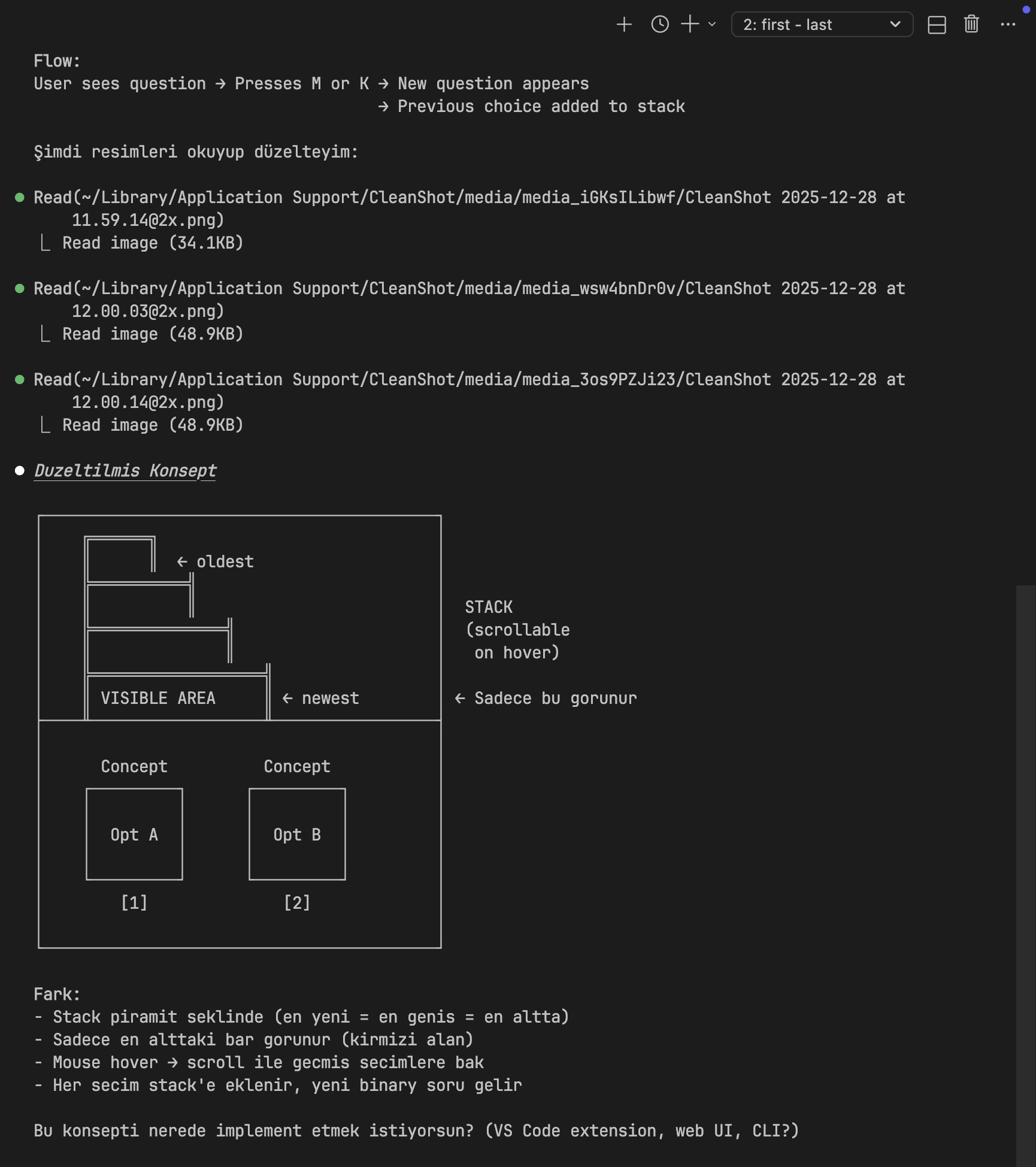
First gave the concept, then read the images and updated:
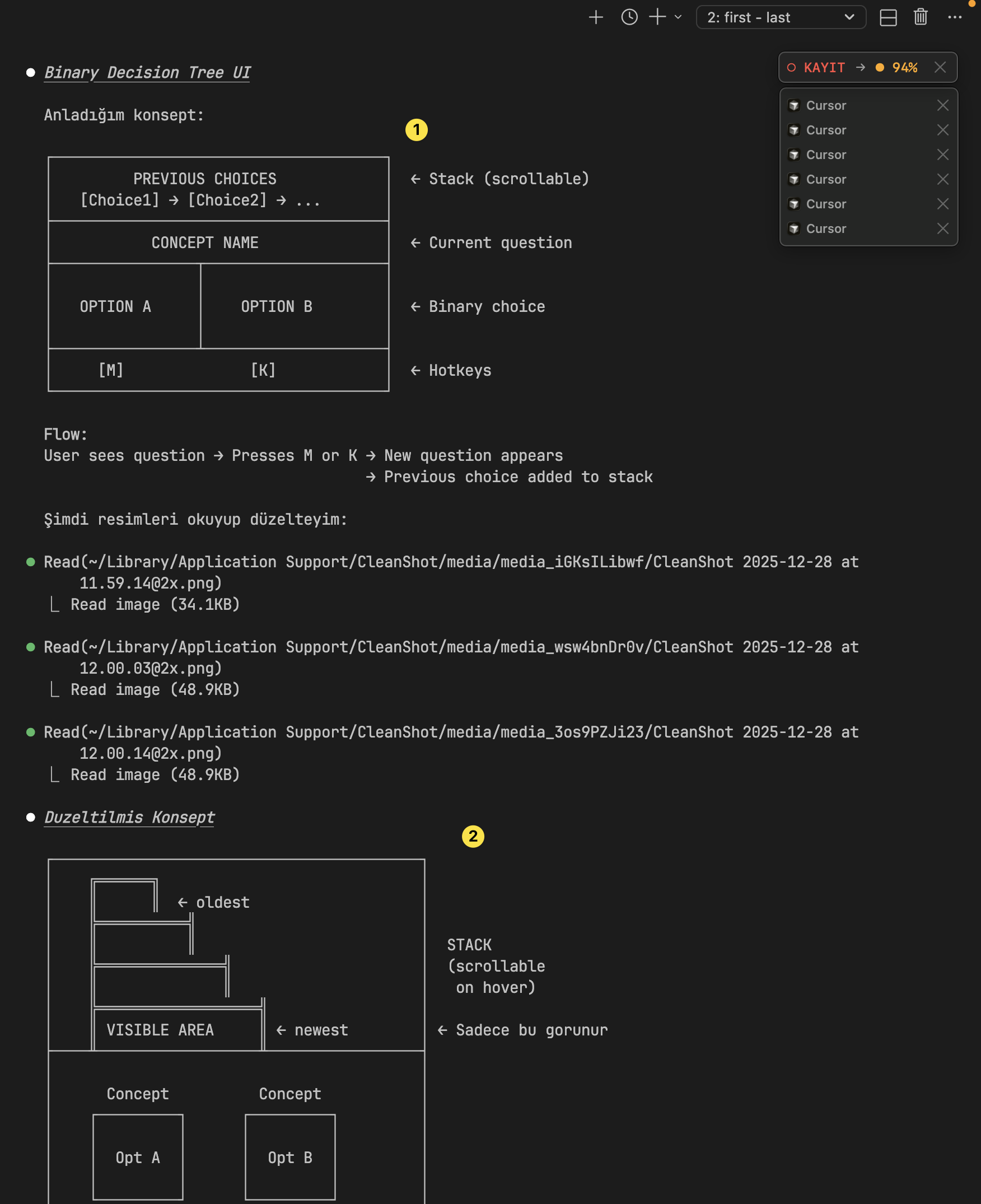
Prediction
Actual Output
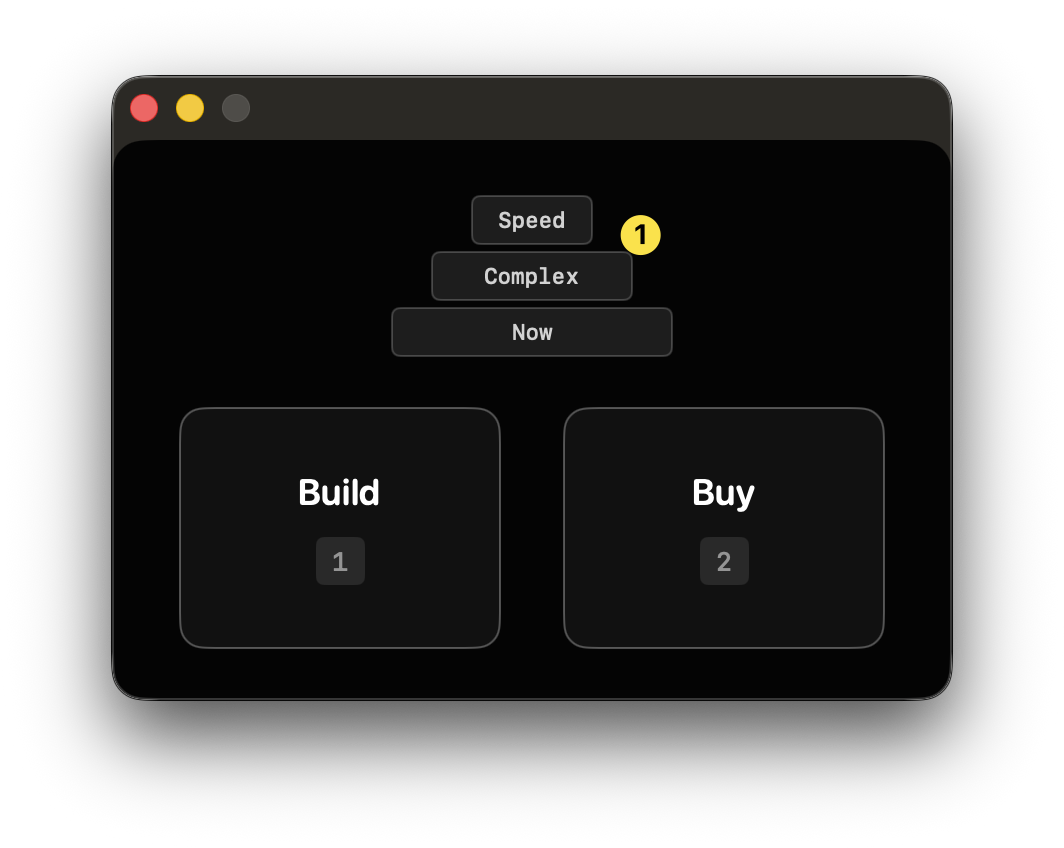
Result: Stack view is solid. But hotkeys are broken.
3. ITERATIVE - Think Separately for Each Image
The most detailed approach. Read each image, update the concept, read again, update again.
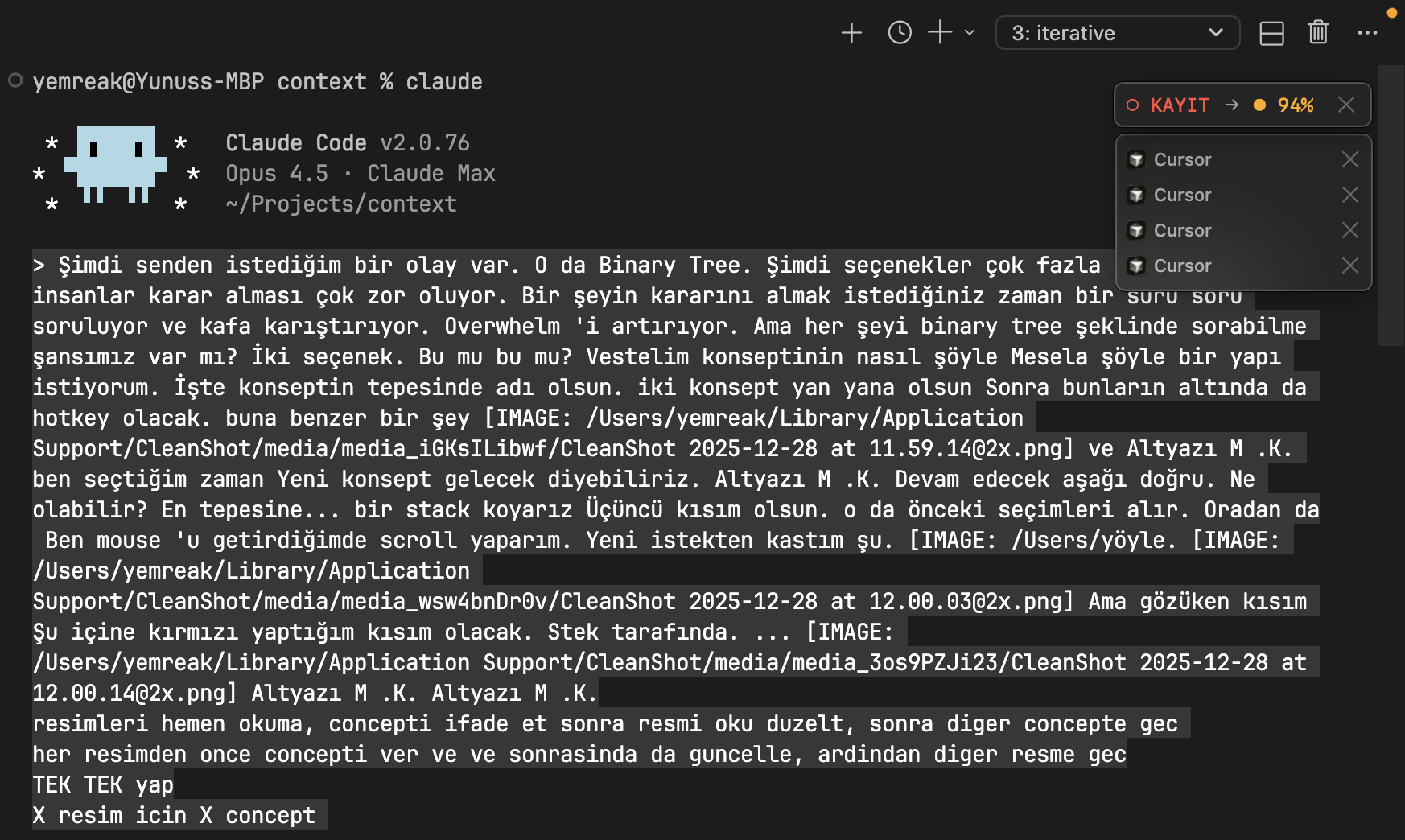
AI’s First Response
Kept updating the concept in its head. Did this 3 times for 3 images:
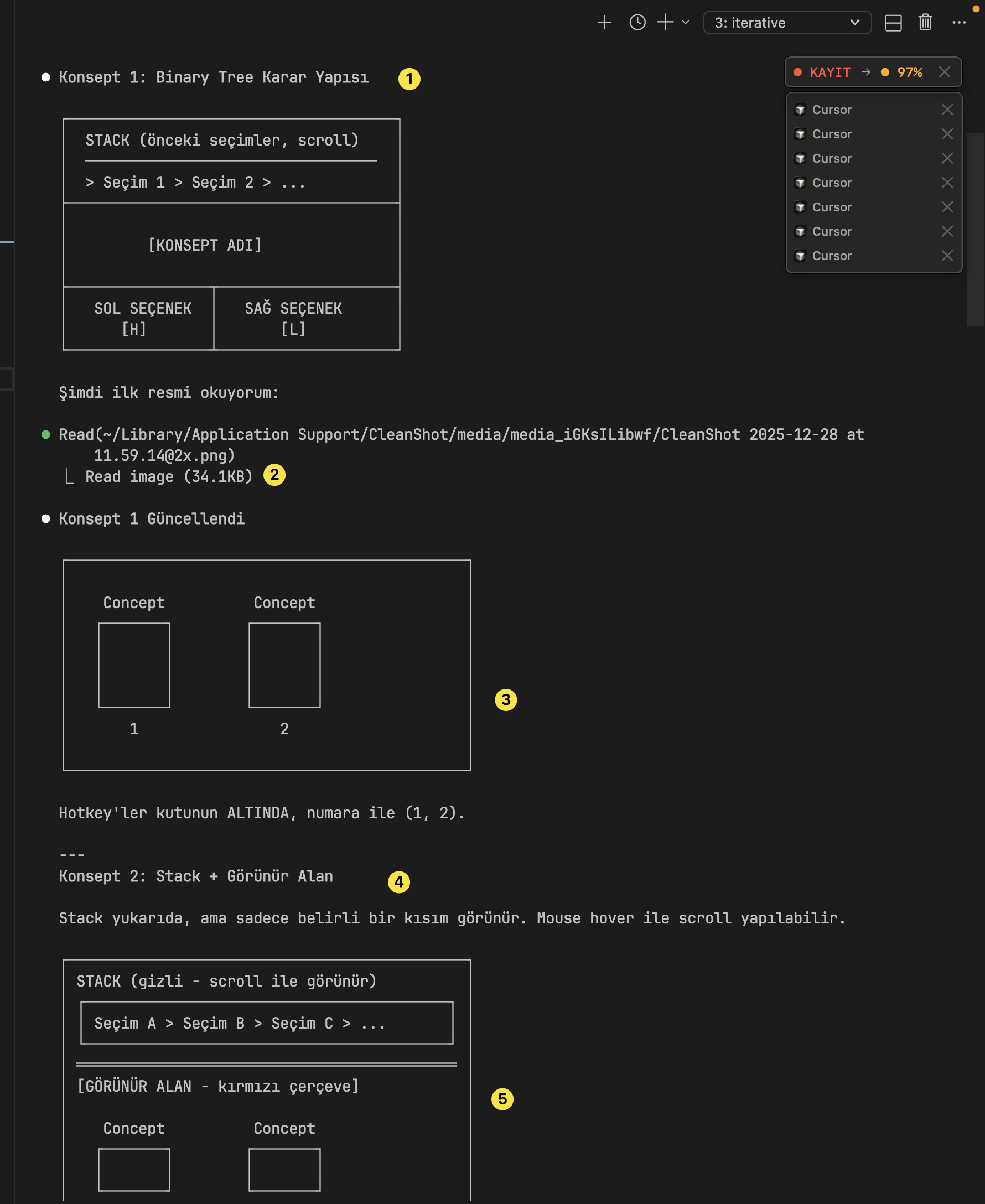
Prediction
Showed it perfectly as ASCII art:
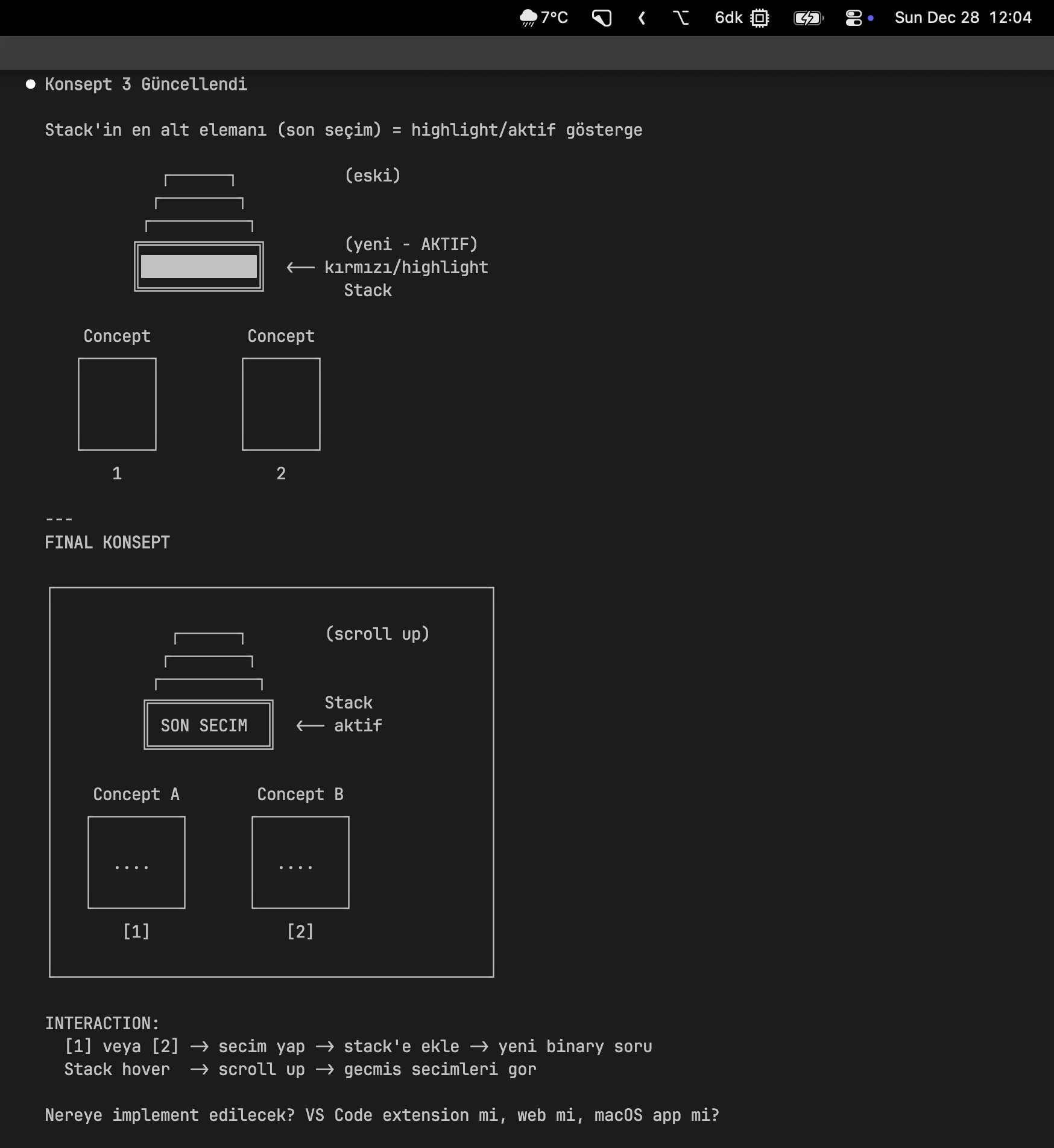
Actual Output
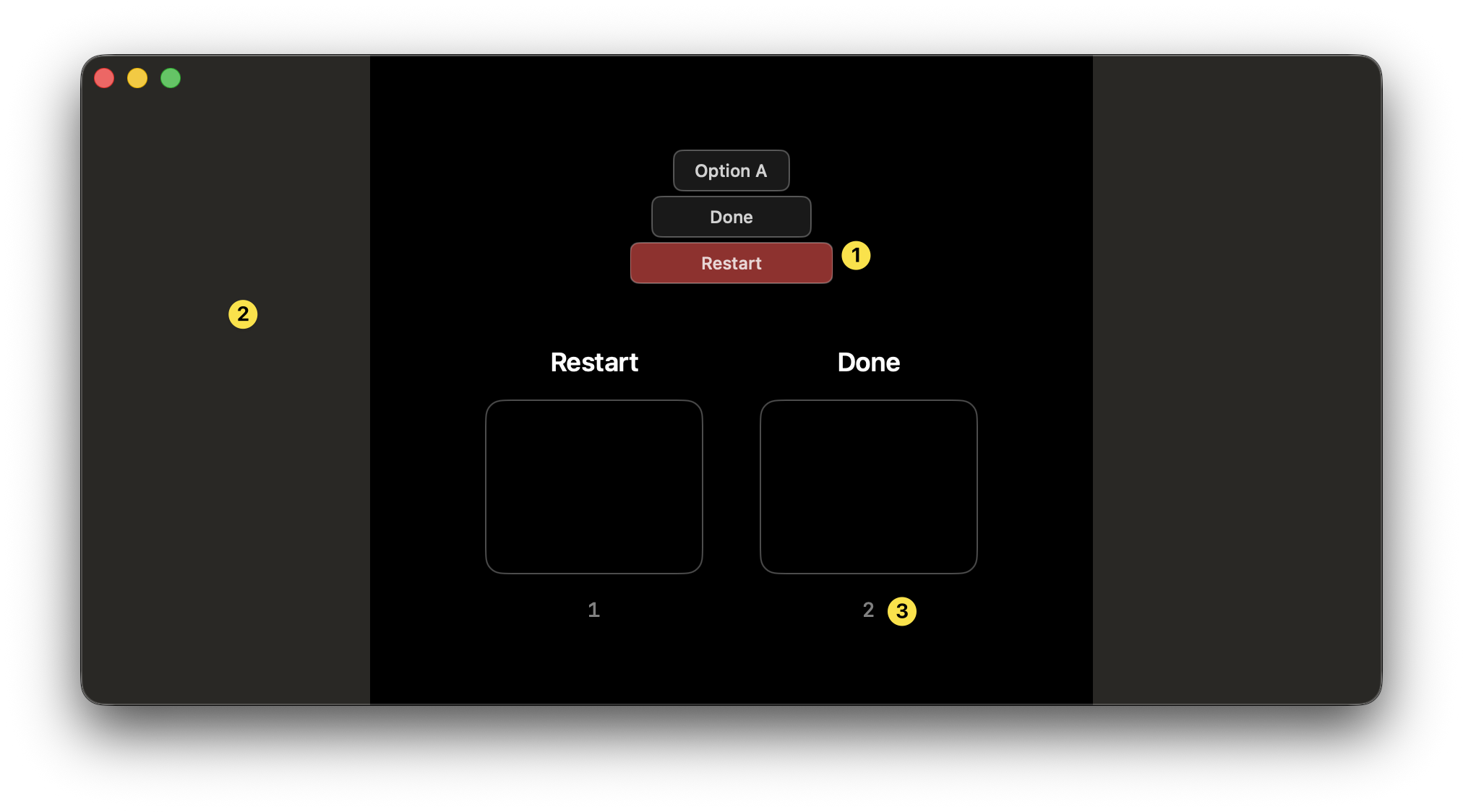
Result: Worst output. Black areas, broken UI. It gave what I asked but the rest is empty.
Comparison
| Approach | Prediction Quality | Actual Output |
|---|---|---|
| ONE SHOT | Medium | BEST |
| CONCEPT FIRST | Good | Medium (hotkey broken) |
| ITERATIVE | Perfect (ASCII) | WORST |
What I Learned
The one I expected to give the worst output, ONE SHOT, gave the best.
Why?
Ambiguity = Opportunity
When I gave AI incomplete information, with high ambiguity it could fill in from its own knowledge better. I’m leaving a higher chance for it to contribute something of its own.
In the ITERATIVE approach I gave everything in detail. AI just did what I told it. It didn’t add its own knowledge.
In ONE SHOT, I left gaps. AI filled those gaps with its own experience.
Conclusion
The exact opposite of my experimental expectation.
- Less detail = Better output
- More control = Worse output
Trusting AI and leaving gaps produces better results than trying to control everything.